Introduction
For many of us, social media has moved far beyond being just a way to pass the time. It has become the primary stage for our social lives, for self-expression, and in some cases, even professional identity. But as we spend more and more of our lives online, we have to ask ourselves: what are we trading for this constant connectivity? How safe are these spaces we so casually inhabit? And what happens when the interactions that were meant to connect us instead cause harm?
Social media victimization includes the experience of being targeted by aggressive, unwanted, or malicious behavior on digital platforms; it is not a niche problem anymore. It is happening to millions, often invisibly, and it leaves real, lasting scars. Unlike traditional bullying, online victimization does not fade easily. It is persistent, can be shared instantly with a global audience, and offers no real escape. This combination often makes the psychological impact much heavier than face-to-face bullying
But why does this happen? What makes social media such fertile ground for victimization? Here, we will take a deeper look at social media victimization. We will explore the multiple forms it can take, from cyberbullying and harassment to more insidious forms like social exclusion and online manipulation. We will examine the psychosocial toll it takes on individuals, from emotional distress to impacts on identity and relationships. Finally, we will examine the current research, identify gaps in our understanding, and consider what can be done to create a safer and more resilient digital environment.
Ultimately, this report aims to understand the problem in all its complexity. Social media is not going away, so how do we ensure that it remains a space for genuine connection rather than a stage for harm? These questions guide our exploration and set the stage for examining this growing epidemic in depth.
The Rise of a Digital Epidemic: Why Victimization is So Prevalent Today
The Nature of Social Media Platforms
When we think about why social media has become such a fertile ground for victimization, it helps to start by looking at the very design of these platforms. Unlike face-to-face interactions, where social cues, tone, and the possibility of immediate consequences tend to regulate behavior, the digital world offers a level of anonymity and impunity that simply does not exist offline. People can hide behind their pseudonyms, create multiple or fake profiles, and act in ways they would never dare in person. This all matters because the moment consequences feel distant or impossible, aggression suddenly becomes easier, and small conflicts can quickly escalate into persistent harassment (D’Souza et al., 2021).
There is also the question of platform design itself. Social media is engineered to keep us engaged, and algorithms are the invisible engines driving that engagement. But these algorithms don’t discriminate between positive and negative content; they simply show us what is likely to trigger a reaction. The problem here is that provocative, sensational, or even hateful content often provokes the strongest emotional response. This results in harmful messages that are actively amplified by the system, reaching wider audiences and creating cycles of exposure that victims can rarely escape (O’Neil, 2016). A single comment, video, or post intended to humiliate or intimidate can spread far beyond the original context, and suddenly, an isolated act of aggression becomes a public spectacle with real emotional consequences.
Accessibility compounds the problem even further. With social media accessible at any hour through smartphones, tablets, and laptops, harassment can infiltrate every corner of life. Unlike traditional bullying, which might stop when the school bell rings or the workday ends, online victimization is relentless, following individuals into their homes, their private spaces, and even their moments of rest (Chan et al., 2021). The feeling of “nowhere to hide” can create persistent stress, erode a sense of safety, and contribute to anxiety, depression, and social withdrawal.
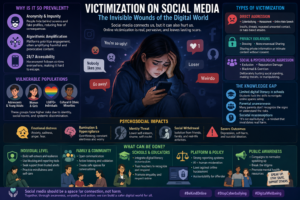
So, when we ask why social media victimization is so prevalent today, the answer isn’t just about bad actors. It’s about a perfect storm: the combination of anonymity, algorithmic amplification, and constant accessibility creates an ecosystem where harmful behavior is not only possible but often encouraged. The platforms that are intended to connect us can inadvertently become instruments of harm, leaving users vulnerable to repeated and escalating victimization.
Societal and Behavioral Shifts
It’s not just the platforms themselves that make social media a hotspot for victimization. The way we, especially younger generations, interact with the world has fundamentally changed, and social media sits at the heart of that shift. For many, these platforms are no longer a supplement to real-life interactions; they have become the primary stage for social life. Friendships, social groups, and even conflicts that once unfolded in schoolyards, college campuses, or workplaces now play out online (Lenhart et al., 2010). Every like, comment, or share can influence social standing, sometimes in ways far more public and enduring than face-to-face interactions. And when conflicts escalate (whether through harassment, exclusion, or shaming), the emotional and psychological impact can be just as severe, if not greater, than traditional interpersonal confrontations.
This heavy reliance on social media can also become compulsive, leading to what researchers call Problematic Social Media Use (PSMU). At first glance, PSMU can look like simply “being online too much,” but it goes deeper than time spent on scrolling. It is marked by a loss of control, where checking notifications or feeds becomes less of a choice and more of a
compulsion. People caught in this cycle often describe feeling restless or anxious if they cannot log in, and the act of scrolling provides only temporary relief before the urge returns. At its core, PSMU is driven by two powerful psychological forces: the fear of missing out (FOMO) and constant social comparison. Each scroll offers the possibility of reassurance that validate one’s social standing. Yet the same scroll also exposes users to endless opportunities to compare themselves against peers, influencers, or strangers, which can erode self-esteem and deepen the craving for external validation. The result is a feedback loop: the more one seeks validation, the more one is exposed to content that fuels insecurity, leading to even greater reliance on the platform. The danger here is that PSMU makes individuals more visible, available, and vulnerable. Because they are spending disproportionate amounts of time online, they naturally encounter more opportunities for harassment, exclusion, or manipulation. Their compulsion also makes it harder to disengage when something harmful occurs. Unlike casual users, who might log off after a negative encounter, individuals with PSMU often feel they cannot step away without risking social exclusion or missing crucial updates. This leaves them tethered to the very environments where harm is most likely, effectively trapping them in harmful digital loops that amplify both exposure and impact (Kim et al., 2022).
Another subtle but profound shift comes from the very nature of digital communication itself. In face-to-face conversations, we rely on tone, gestures, and facial expressions to interpret intention and truth. Online, these cues vanish, creating a vacuum that can be exploited. Here, tactics like gaslighting (making someone question their own memories or sanity) or emotional blackmail (manipulating someone through guilt or fear) can be deployed with minimal risk of immediate confrontation (Longobardi et al., 2020). The ability to craft entirely separate personas, combined with a lack of social accountability, has created a new kind of social literacy: the ability to influence, control, or manipulate others psychologically, without any physical presence.
So, when we consider why victimization spreads so easily online, we have to look beyond the platforms themselves. The migration of our social lives online, the compulsive need for validation, and the vacuum of non-verbal cues have all combined to create an environment where victimization can flourish. And it raises a question we can’t ignore: if these shifts are so deeply ingrained, how do we teach digital literacy, resilience, and empathy in a space where the rules of interaction are constantly evolving? How do we protect vulnerable users without restricting the freedom and connectivity that make social media so compelling in the first place?
Types of Victimization on Social Media
Victimization on social media is far from a singular event. It is a complex spectrum of harmful behaviors that can affect individuals in multiple ways. While the term “cyberbullying” is often used as a catch-all, the reality is far more nuanced. To truly understand the scope of the problem, it is important to distinguish between different forms of online aggression, each with its own patterns, impacts, and consequences.
Direct Aggression
Direct aggression involves overt, intentional acts designed to cause harm to a specific individual or group. The most familiar form is cyberbullying, defined as the repeated and intentional use of digital technology to harass, threaten, or humiliate someone (Patchin & Hinduja, 2021). But cyberbullying is more than a single mean comment or isolated insult. It is persistent, often taking the form of spreading malicious rumors, creating fake profiles to mock someone, or posting embarrassing photos or videos without consent. The aim is usually to assert power and inflict emotional distress, leaving victims feeling exposed and powerless.
Harassment, while closely related, has its own unique characteristics. Unlike cyberbullying, which often revolves around repetition with the aim of humiliation, harassment can take the form of persistent, unwanted contact intended to intimidate or exhaust the target. This might include repeated messages, tagging someone incessantly, or commenting even after being asked to stop (Sutton et al., 2022). Harassment can be perpetrated by strangers or acquaintances, but the effect is the same: a constant sense of anxiety and intrusion.
One of the most severe forms of direct aggression is online hate speech. This involves the public expression of hatred, discrimination, or violence against a person or group based on a protected characteristic suhc as race, religion, ethnicity, gender, or sexual orientation. Studies have shown it normalizes prejudice, incites real-world aggression, and contributes to broader societal harm (Matthews & Johnson, 2023).
Privacy Violations
Beyond direct aggression, social media victimization also manifests through invasions of privacy. Doxxing, for instance, involves publicly exposing private or identifiable information, such as addresses, phone numbers, or workplace details, without consent, often with the goal of intimidation or real-world harm (Kowalski & Limber, 2020). This weaponization of personal information makes victims feel vulnerable and constantly watched, heightening psychological stress.
A related and particularly damaging form is the nonconsensual sharing of private content, often called “revenge porn.” This involves distributing sexually explicit images or sensitive personal information without permission (O’Neill & Dinh, 2021). Beyond the immediate violation, the loss of control over one’s digital identity can lead to profound psychological distress,
reputational damage, and social isolation. Victims are left navigating a digital landscape where their personal narrative has been co-opted and weaponized against them.
Social and Psychological Aggression
Finally, social and psychological aggression targets social standing and emotional well-being rather than delivering direct threats. Exclusion, for instance, may seem minor but can be devastating. Being deliberately left out of an online group, chat, or event can produce feelings of isolation, rejection, and social pain, especially in a world where so much of social life occurs online (Hinduja & Patchin, 2020).
Reputation damage is another subtle yet potent form of aggression. By spreading false information, rumors, or manipulated content, perpetrators can undermine a person’s credibility and trustworthiness, often permanently (Tokunaga, 2010). The shareable nature of online content means that a single lie can quickly spiral out of control, leaving the victim’s social and professional reputation in jeopardy.
Finally, blackmail and coercion are perhaps the most insidious forms of psychological aggression. By threatening to release private information or images unless the victim complies with demands, perpetrators establish a power dynamic rooted in fear. This calculated manipulation can leave victims feeling trapped, powerless, and emotionally destabilized (Kowalski & Limber, 2020).
Taken together, these forms of victimization show that social media aggression is not one dimensional. It spans overt attacks, privacy violations, and subtle manipulations, each exploiting the unique vulnerabilities of digital life. The variety and sophistication of these tactics make social media victimization a pervasive and deeply personal public health concern, and highlight why understanding its complexity is essential for prevention and intervention.
| Category | Specific Type | Description | Examples |
| Direct
Aggression |
Cyberbullying | The repeated and intentional use of digital technology to harass, threaten, or humiliate someone. | Spreading malicious rumors about a classmate; creating a fake profile to mock a person; sharing embarrassing photos or videos without consent. |
| Harassment | Persistent and unwanted
contact intended to intimidate or exhaust a target. |
Sending repeated, unwanted messages; incessantly tagging someone in posts; continually commenting on a person’s
content after being asked to stop. |
|
| Online Hate
Speech |
The public expression of hatred or violence against a person or group based on their identity. | Posting slurs, offensive jokes, or explicit calls for violence
targeting a person’s race, religion, gender, or sexuality. |
|
| Privacy
Violations |
Doxxing | Publicly revealing private or identifiable information about an individual without their consent, often with the intent to cause real-world harm. | Publishing a person’s home address, phone number, or workplace details on a public forum; sharing a victim’s family photos with malicious intent. |
| Nonconsensual
Sharing |
The distribution of private or sensitive content, often
sexually explicit, without the subject’s permission. |
Circulating intimate images or sensitive text messages to
humiliate someone publicly; sharing private chat logs or personal messages. |
| Social and
Psychological Aggression |
Exclusion | Intentionally leaving someone out of an online group or conversation to cause feelings of isolation and rejection. | Removing a person from a group chat where their friends are communicating; deliberately excluding someone from an online gaming group or event. |
| Reputation
Damage |
Spreading false information, rumors, or manipulated
content to harm a person’s social standing. |
Creating a fake social media profile to spread lies about someone; posting fabricated screenshots of a private
conversation to ruin a friendship. |
|
| Blackmail and
Coercion |
The use of information or content to manipulate,
control, or extort a person by threatening to release it. |
Threatening to share a private photo unless the victim
complies with a demand; using a sensitive conversation as leverage to force someone into an action. |
Table 1: Summary of the various types of Social Media Victimization
Vulnerable Populations and Differential
Vulnerability
- Social media victimization does not affect everyone equally. Certain populations are disproportionately at risk due to a mix of developmental, social, and cultural factors.
- Recognizing these differential vulnerabilities is essential for building prevention and intervention strategies that actually meet the needs of those most affected.
Key Demographics
Adolescents and young adults are the most at-risk demographic. Developmentally, this stage of life is marked by an intense need for peer approval and belonging, and social media is often the main arena where that validation is sought (Pew Research Center, 2018). The adolescent brain,
still developing in areas related to self-regulation and emotional processing, is particularly sensitive to rejection, humiliation, and exclusion. When victimization occurs online, through bullying, public shaming, or hostile comments, it can feel amplified, permanent, and inescapable. Compounding this, many adolescents lack mature coping mechanisms to handle complex digital conflicts, making the psychological impact of online aggression especially severe (Hinduja & Patchin, 2020).
Gender and sexual identity play a powerful role in shaping online victimization. Women and girls are disproportionately subjected to sexual harassment, misogynistic abuse, and threats of violence online (Duggan et al., 2014). Nonconsensual sharing of intimate images, which is commonly referred to as “revenge porn,” is also overwhelmingly targeted at women. Such victimization is often used to silence or intimidate, reinforcing gendered power dynamics. Similarly, LGBTQ+ individuals experience disproportionate levels of online hate speech, harassment, and exclusion. These attacks are not random but are rooted in homophobia and transphobia, and because they strike at the core of personal identity, they can trigger deep psychological harm and feelings of marginalization (Meyer, 2020).
Cultural and ethnic minorities face additional risks, particularly in the form of online hate speech and discrimination. Social media spaces frequently amplify racist and xenophobic rhetoric, sometimes fueled by algorithmic patterns that prioritize inflammatory content (Matthews & Johnson, 2023). For members of these communities, the harm is twofold: overt acts of abuse alongside the more subtle but persistent microaggressions that dominate online interactions. The cumulative exposure to both explicit and casual racism not only reinforces offline inequalities but also fosters chronic stress, alienation, and erosion of trust in digital environments.
The Nuances of Vulnerability
Online vulnerability is not a fixed label; it shifts depending on personal histories, coping resources, and the broader social contexts people carry into the digital world. While demographic groups provide a broad outline of who might be at risk, the lived reality of vulnerability is far more layered and situational (Tokunaga, 2010). This means that understanding risk requires looking beyond categories like age or gender, and instead considering the interplay between offline experiences, psychological resources, and the design of platforms themselves. For example, individuals who already struggle with strained peer relationships or feelings of isolation offline may be more susceptible to online targeting. Digital victimization in such cases does not occur in isolation; it often extends or magnifies patterns of exclusion and rejection that are already present in one’s immediate environment (Wright & Wachs, 2020). What might appear to a well-supported individual as “just another mean comment” may, for someone already socially displaced, feel like a powerful confirmation of their unworthiness or exclusion. This compounding effect illustrates how pre-existing vulnerabilities can be intensified in digital spaces.
Psychological resources also play a crucial role. Research shoes that people with higher levels of emotional regulation. supportive family ties, or resilient peer networks are often able to buffer the effects of online hostility more effectively (Schunk & DiBenedetto, 2020). In contrast, individuals who lack such protective factors are at greater risk of internalizing online aggression, leading to heightened anxiety, depression, or diminished self-esteem (Kowalski et al., 2014). Vulnerability, therefore, is not only about exposure to harm but also about the capacity to withstand, interpret, and process it. Two individuals can encounter the same hostile post and walk away with entirely different psychological outcomes.
Another nuance lies in the fluidity of roles within digital interactions. The neat distinction between “victim” and “aggressor” often collapses online. Studies suggest that individuals who experience victimization may later retaliate, either against their original aggressor or toward a more vulnerable target, creating a cycle of aggression and harm (Barlett et al., 2021). This fluidity challenges the simplistic binary of bully and victim and instead highlights a more dynamic reality where users oscillate between positions of powerlessness and control depending on context. It underscores the need to view online behaviors as part of complex social dynamics rather than isolated incidents.
Finally, the very structure of platforms can intensify vulnerability in subtle but powerful ways. Features like algorithmic amplification, anonymity, and the permanence of digital traces create environments where even minor hostilities can escalate into large-scale attacks (Cinelli et al., 2021). For instance, a single harmful post can be algorithmically promoted to thousands of viewers, turning what might have been a small insult into widespread humiliation. Similarly, anonymity emboldens aggressors while stripping victims of the ability to hold perpetrators accountable, and the permanence of digital traces ensures that harmful content can resurface long after the original incident (Livingstone & Smith, 2014). Vulnerability, then, is not merely a matter of individual sensitivity but also a reflection of how digital infrastructures are designed to magnify conflict while muting protective responses.
Psychosocial Effects of Victimization
The harm of social media victimization doesn’t just stay online but also seeps into real life in ways that are hard to escape. Unlike traditional bullying, which usually has limits of time and space, online harassment has no off-switch. The phone in your pocket means you can be reached at any moment, in any place, and that constant exposure leaves people feeling like there’s no safe zone. It’s not just a notification; it’s a reminder that hostility follows them everywhere.
Living in that state of “always on edge” chips away at mental and emotional balance. Anxiety, fear, and hypervigilance become a daily baseline. And this doesn’t stay abstract or “in the mind” only; stress spills over into the body and into everyday behavior. Victims may start to see the social world less as a source of connection and more as a source of threat, reshaping how they think about themselves and how they relate to others.
Mental Health Impacts
The psychological harm caused by social media victimization doesn’t just vanish when the post is deleted or the comment is removed. It often lingers, shaping how people feel, think, and interact long after the online encounter. Understanding these effects can be tricky, especially for readers new to the topic, so it helps to look at them through some accessible, real-world concepts.
Emotional Dysregulation is one of the most immediate impacts. Essentially, it means struggling to manage emotional reactions. Victims might experience sudden swings between anger, sadness, or numbness. For instance, a young adult who receives repeated insulting messages may go from feeling irritable and on edge one moment to withdrawing completely the next. This happens because the constant stress overloads the nervous system, making it harder to “reset”
emotionally. Over time, emotional dysregulation can affect relationships, academic or work performance, and overall well-being (Marín-López et al., 2020).
Rumination is another common pattern. This is when people replay the negative event in their minds over and over, much like rewinding a painful scene in a movie. For example, a student targeted by a humiliating meme might obsessively check who has seen it, replay conversations in their head, or imagine how others are judging them. This continuous mental loop keeps stress high and can magnify feelings of sadness, anxiety, or worthlessness (Feinstein et al., 2014).
Victims often also develop hypervigilance which is a state of constant alertness. Because online harassment can strike at any time, individuals begin scanning their feeds repeatedly, checking for new threats, and anticipating negative messages. While this might seem like a way to “stay prepared,” it actually keeps the body in a chronic state of stress. Over time, this can disturb sleep, concentration, and even physical health (Kowalski et al., 2019).
Another layer of impact is learned helplessness. When someone experiences repeated attacks online and feels powerless to stop them, they may come to believe that nothing they do can change the situation. This often leads to withdrawal, avoidance, or reluctance to seek help. For instance, a teenager bullied in a school group chat might stop participating in online communities
altogether, even if they previously enjoyed them. Learned helplessness not only reinforces feelings of isolation but can also worsen anxiety or depression (Seligman, 1975).
Identity threat is subtler but equally damaging. Social media victimization often targets aspects of who a person is, whether it’s their appearance, opinions, gender, or sexual orientation. This can make them question their self-worth or sense of belonging. Someone who is mocked for sharing their creative work online may start doubting their talent, or a LGBTQ+ youth who faces targeted harassment may feel unsafe expressing their identity. These experiences chip away at self-confidence and can impact how people navigate both online and offline spaces (Hinduja & Patchin, 2020).
Finally, social media victimization can cause social displacement, where the victim gradually disengages from real-life relationships and activities. The mental energy spent processing online hostility often leaves little bandwidth for friends, family, or hobbies. For example, a college student preoccupied with monitoring who commented on a hurtful post may skip study sessions or avoid social gatherings, slowly isolating themselves. Over time, this withdrawal reinforces the psychological harm, creating a cycle where the victim becomes both socially and emotionally isolated.
In reality, most victims experience a combination of these effects, and the severity depends on factors like age, social support, and personal coping strategies. Understanding these patterns is essential not just for researchers, but for parents, educators, and peers who want to recognize signs of distress and intervene effectively.
Physiological and Behavioral Outcomes
Victimization on social media often manifests in the body and the mind, too, shaping sleep, stress levels, and daily behaviors long after the online attack occurs. When harassment is constant, the body can behave as if it is under a continuous threat, even when the danger is digital rather than physical.
Understanding these impacts is easier when we look through the lens of established
psychological theories. According to Selye’s General Adaptation Syndrome (1956), the body reacts to stress in three stages: alarm, resistance, and exhaustion. In the context of online harassment, a hurtful comment or post triggers the alarm stage, alerting the nervous system. When this stress is ongoing, the body remains in the resistance stage, constantly on edge and monitoring for new threats. Over time, this persistent activation can lead to exhaustion, causing sleep disruption, fatigue, and other stress-related health issues (Ghasemi et al., 2021).
One of the most common outcomes of this stress interplay is sleep disturbance. Victims may lie
awake at night replaying hurtful messages, worrying about new comments, or anticipating the next attack. Even a late-night notification can trigger the body’s fight-or-flight response, keeping the nervous system in a constant state of alert. Over time, this chronic activation can weaken the immune system, making the person more susceptible to illness (Ghasemi et al., 2021). For example, a college student harassed in a group chat may check their phone repeatedly at 2 a.m., heart racing, unable to quiet their thoughts. Over weeks and months, this sleep disruption can accumulate, leading to fatigue, headaches, and even digestive or cardiovascular problems.
Beyond physical health, social media victimization often spills over into daily behaviors, shaping how individuals interact with the world around them. Many victims begin to withdraw from offline interactions, avoid activities they once enjoyed, or become hyper-focused on monitoring their online presence. To understand why these reactions differ so much between people, Cognitive Appraisal Theory (Lazarus & Folkman, 1984) provides a useful lens. This theory proposes that stress and its consequences are not determined solely by the event itself, but by how an individual perceives, interprets, and evaluates the situation. In other words, it’s not just the harassment that matters, but how threatening, controllable, or meaningful a person believes it to be. For instance, two teenagers might encounter the same hurtful comment online. One may dismiss it as unimportant, experiencing little disruption to their mood or behavior. The other, however, may interpret it as a personal attack or as confirmation of social rejection, triggering heightened vigilance, rumination, and withdrawal from both online and offline interactions. In this way, the theory helps explain why the same incident can produce vastly different psychological and behavioral outcomes across individuals.
These behaviors are often driven by a need to regain some sense of control in a digital space that feels unpredictable and hostile. A victim may feel that by withdrawing or constantly monitoring their online presence, they can protect themselves from further harm. For example, a teenager might skip a family outing or avoid school events because anxiety about what could be happening online dominates their thoughts. While these coping strategies are understandable, they can inadvertently reinforce isolation, deepen stress, and compound both mental and physical strain over time. By linking everyday behavioral changes to the cognitive processes highlighted in this theory, we can better understand not just what victims do, but why they do it, making it easier to design supportive interventions and strategies.
In severe cases, prolonged exposure can lead to hopelessness and suicidal ideation. When harassment feels relentless and there seems to be no refuge whether online or offline; the individual may perceive their situation as inescapable. Young people who spend much of their social life on digital platforms may experience this sense of being “trapped” acutely. Research consistently shows a strong correlation between social media victimization and increased risk of self-harm or suicidal thoughts (van Geel et al., 2018). The constant assault on a person’s sense of safety, coupled with feelings of isolation and helplessness, can make suicide feel like the only way to end the pain, highlighting the urgent need for timely intervention and support.
Finally, chronic stress and behavioral disruptions interact in a vicious cycle. Poor sleep worsens emotional regulation, heightened vigilance increases stress hormones, and avoidance behaviors reduce social support. Together, these physiological and behavioral responses deepen the negative impact of victimization, making recovery more challenging.
Uncovering the Causal Link: Longitudinal vs. Cross-Sectional Evidence
Establishing a direct causal link between social media victimization and its negative
consequences are tricky. It’s one thing to notice that victims often report higher levels of anxiety, depression, or behavioral changes, but proving that the harassment causes these outcomes requires careful study design. Researchers tackle this challenge using different approaches, primarily cross-sectional and longitudinal studies, each offering unique insights but also facing specific limitations. Cross-sectional studies provide a snapshot, showing correlations between victimization and outcomes at a single point in time, while longitudinal studies track individuals over months or years, helping to clarify the direction and persistence of effects. In this section, we’ll explore how these methods are used, what they reveal about the consequences of victimization, and why understanding the methodological differences is essential for interpreting the evidence accurately.
Cross-Sectional Studies
(Note: Cross-Sectional study is a research design that examines a population at one single point in time. It can show associations between variables (e.g., victimization and depression) but cannot determine which came first or prove causality.)
Early research on online victimization predominantly relied on cross-sectional studies, which collect data at a single point in time. For instance, participants might be asked: “Have you been a victim of cyberbullying in the last year?” and “How would you rate your current mental health?” While this approach efficiently reveals correlations between victimization and poor mental health, it cannot determine the direction of these relationships.
Several studies illustrate this. A survey of 418 medical students in Gujarat found a 27.5% prevalence of cyberbullying and a 32.1% prevalence of social media addiction, with both factors significantly associated with higher odds of depression, anxiety, and stress (Parmar et al., 2024). Similarly, a study of 100 youths aged 18–28 in Gujarat reported 57% experiencing cyberbullying and 41% cyberstalking, with 67% of victims showing moderate to severe levels of depression, anxiety, and stress (Parmar et al., 2025). In the U.S., a 2024 CDC report found that 77% of high school students were frequent social media users, and frequent users were significantly more likely to experience electronic and in-person bullying, with increased risks of sadness, hopelessness, and suicidal ideation (Centers for Disease Control and Prevention, 2024).
Despite their usefulness in highlighting patterns and prevalence, cross-sectional studies have notable limitations. Because they provide only a “snapshot” in time, they cannot establish causality; whether victimization causes mental health difficulties or whether pre-existing psychological vulnerabilities make someone more susceptible to online harassment (O’Keeffe & Clarke-Pearson, 2011). They also rely on self-reported data, which can introduce recall bias or social desirability bias, and they do not account for changes over time, such as evolving peer relationships, fluctuating social media use, or the development of coping strategies. Moreover, rare but severe outcomes, like suicidal behavior, may be overlooked because participants are not followed longitudinally.
For these reasons, while cross-sectional studies provide valuable insight into prevalence, risk factors, and correlations, understanding the causal impact of social media victimization requires longitudinal studies, which track individuals over months or years to observe how victimization influences psychological, behavioral, and social outcomes over time.
Longitudinal Studies
(Note: Longitudinal study is a research design that follows the same individuals over an extended period. By observing how variables change over time, it can provide stronger evidence for causal relationships and reveal long-term effects.)
While cross-sectional studies provide snapshots of social media victimization, they cannot tell us whether harassment directly causes psychological harm. Longitudinal research, in contrast, follows the same individuals over time, allowing researchers to observe how experiences of victimization unfold and affect mental health across months or years. In India, such longitudinal evidence is still limited but emerging, particularly regarding adolescents and young adults.
One of the most robust sources is the UDAYA (Understanding the Lives of Adolescents and Young Adults) panel survey, which tracked over 16,000 adolescents in Uttar Pradesh and Bihar
between 2015–16 and 2018–19. These studies found that cyberbullying victimization was consistently associated with depression and suicidal ideation over time. Importantly, these effects were not short-lived; rather, they persisted across years, highlighting that the psychological consequences of online harassment can endure well beyond the immediate episode. The UDAYA findings also identified several predictive factors for vulnerability to cyberbullying. Adolescents who experienced offline bullying, those with high sensitivity to peer opinions, and individuals posting frequently on social media were at greater risk of being targeted. These risk factors remained relevant even during the COVID-19 lockdown, when online activity increased dramatically.
A systematic review examining cyberbullying among Indian adolescents reinforces these findings, noting rising rates of online harassment due to increased technology access. However, it also highlights a critical gap: few robust longitudinal studies exist, and more multi-wave research is needed to fully capture the long-term psychosocial outcomes of victimization.
Longitudinal evidence points to certain groups as particularly vulnerable to persistent psychological harm: girls, sexual minorities, and individuals with a prior history of victimization. Documented long-term consequences include elevated rates of depression, anxiety, somatic complaints, self-harm, and suicidal behavior. These findings underscore that social media victimization is not just a transient stressor; it can set off a cascade of enduring mental health challenges if left unaddressed. Although the majority of Indian research remains cross-sectional, studies like UDAYA provide crucial insights into the causal relationships between online harassment and negative psychological outcomes. This evidence highlights the urgent need for ongoing, longitudinal research to inform interventions, policies, and educational programs aimed at reducing victimization and supporting affected adolescents and young adults.
The Knowledge and Education Gap
Even as social media use becomes nearly universal among adolescents and young adults, awareness of the risks and consequences of online victimization has not kept pace. many students, parents, and educators underestimate how deeply digital harassment can affect mental health, behavior, and social development. This lack of understanding often leads to inadequate prevention, limited coping strategies, and delayed intervention when harm occurs.
The knowledge gap is not limited to schools. Families may not recognize the signs that a child is experiencing online harassment or may dismiss incidents as just part of growing up online. Similarly, schools and universities often provide minimal guidance on digital citizenship, online
safety, or the psychological impacts of cyberbullying. as a result, victims can feel isolated, unsupported, or misunderstood, while bystanders may not know how to respond. Bridging this educational gap is essential to help young people navigate digital spaces safely and with confidence.
Gaps in Formal Education
Schools, which are traditionally responsible for addressing social and behavioral challenges, have struggled to keep pace with the rapidly evolving digital landscape. Central to this challenge is the concept of digital literacy, which goes beyond simply knowing how to use devices or social media platforms. Digital literacy refers to the ability to access, evaluate, create, and communicate information responsibly in online spaces, while understanding the social, ethical, and psychological implications of digital interactions (Livingstone & Smith, 2014). It includes skills such as critical thinking, recognizing misinformation, understanding privacy risks, and managing one’s digital identity. Without these competencies, students may navigate online spaces blindly, making them more vulnerable to victimization, harassment, or manipulative behavior.
While some schools may offer short-term lessons on internet safety or cyberbullying, these programs often focus on basic do’s and don’ts rather than building a nuanced understanding of digital interactions. Students might be told to “don’t share passwords” or “report bullying,” but they rarely learn how to cope with subtler forms of harm like social exclusion, rumor-spreading, or online manipulation. They also may not develop the emotional and social strategies needed to respond effectively to online conflict or support peers experiencing victimization (Kowalski, Limber, & Agatston, 2018).
Equally concerning is the lack of training for educators. Teachers and school administrators are often on the frontlines of responding to online victimization, yet many feel ill-equipped to identify, document, and manage these incidents effectively. Some may only recognize overt cyberbullying but miss subtler forms of psychological aggression. Without adequate training, interventions may be inconsistent, ranging from disciplinary measures that fail to address underlying causes, to dismissing incidents as minor disagreements or “part of growing up” (Hinduja & Patchin, 2019).
The consequences of these gaps are significant. Students may not receive the guidance or support needed to build digital resilience, and educators may inadvertently fail to prevent escalation or provide psychological support. In effect, the education system can unintentionally leave students vulnerable while missing opportunities to foster digital citizenship skills that could reduce the
prevalence and impact of online victimization. Integrating structured, evidence-based curricula that teach both practical skills and critical understanding of online behavior, along with targeted teacher training programs, is essential to prepare students to navigate digital spaces safely and responsibly.
Gaps in Parental Awareness and Societal Understanding
At a broader societal level, a significant parental knowledge deficit often complicates responses to online harm. Many parents did not grow up with social media as a central part of their lives and are therefore less digitally savvy than their children (Gomez et al., 2020). They may not fully understand the platforms their children use, the coded language or slang in online interactions, or the subtle forms of aggression that can occur. This knowledge gap limits their ability to recognize signs of distress or intervene effectively, leaving children to navigate complex digital conflicts on their own.
A child’s decision to involve parents or other adults is also heavily influenced by their immediate emotional state. One moment, they may feel deeply hurt and seek help; the next, they may downplay the incident or decide it is “not a big deal.” This fluctuating pattern of reporting can make it difficult for adults to grasp the true severity of the situation and to provide timely, appropriate support. In some cases, children may even exploit this gap in knowledge. For instance, a child who receives hurtful messages in a group chat may claim to a parent that it is “just joking” or exaggerate minor incidents to test parental reactions. Some children may deliberately withhold details of cyberbullying or tantrum in order to avoid being restricted from social media, knowing their parents are unfamiliar with digital norms (Livingstone & Smith, 2014). This adds another layer of complexity, as parents may respond inconsistently or feel frustrated and powerless, unintentionally creating opportunities for further conflict or misunderstanding.
Compounding the problem is a persistent societal misconception: “It’s not real bullying because it happens online.” This mindset minimizes the profound harm digital aggression can inflict. Online humiliation often reaches a wider audience than traditional bullying and leaves a permanent digital trace, making the emotional and social consequences potentially more intense and long-lasting. Correcting this misconception is critical so that victims receive empathy, validation, and support rather than having their experiences dismissed or trivialized.
Interventions and Protective Factors
To effectively combat social media victimization, a multi-faceted approach is required, one that addresses the issues at the individual, community, and systemic levels. A combination of empowering individuals with tools and fostering a culture of safety can help mitigate the risks and create a more resilient digital environment.
Individual and Community-Level Interventions
At the most direct level, fostering strong social support is a powerful protective factor against the harm of victimization. The role of peers, family, and trusted adults is critical in providing emotional support, validating a victim’s feelings, and helping them find healthy coping
mechanisms (Hinduja & Patchin, 2020). Simply having a trusted adult to talk to can significantly reduce the psychological toll of online harassment.
Additionally, teaching effective coping strategies is essential. This includes helping individuals develop resilience and self-advocacy skills. For example, a young person can be taught how to document harassment, block aggressors, and report content to platform moderators. They can also be taught mental health coping skills, such as mindfulness or seeking professional help, to manage the stress and anxiety that comes with victimization. Empowering individuals to take control of their digital well-being is a key step in reducing their vulnerability.
Systemic and Policy-Level Solutions
While individual interventions are important, they must be supported by systemic changes. Platform design must evolve to prioritize user safety. This includes developing more intuitive and effective reporting tools, as well as implementing more robust content moderation that can identify and remove harmful content, including hate speech and threats of violence (Pew Research Center, 2020). Platforms must move away from a model that prioritizes engagement at the cost of user safety and embrace a more ethical design that fosters healthy interactions.
Furthermore, strong legal and policy frameworks are needed to hold harassers accountable. This involves passing robust laws that explicitly define and prosecute online harassment and hate speech. Law enforcement and judicial systems must be equipped with the training and resources to handle these cases, sending a clear message that such behavior has serious real-world consequences.
Public Education and Prevention
Prevention is the most effective long-term strategy. This begins with a broad effort in public education and prevention. It is vital to teach students and parents about the crucial link between
social media use and mental well-being. This kind of education should start early and be an ongoing process. Programs that build resilience training can also be highly effective. These programs focus on building psychological resilience to a digital world by teaching skills such as critical thinking, media literacy, and emotional regulation, all of which are essential for navigating the complexities of online life.
Conclusion
The landscape of social media, while a powerful tool for connection and communication, has created a new frontier for victimization with profound psychosocial consequences. This report has established that the issue is not simply a new form of an old problem; it is a complex digital epidemic fueled by a blend of platform design and societal behavior. The anonymity afforded by these platforms, their algorithmic amplification of harmful content, and their 24/7 accessibility have created an environment ripe for direct, privacy-violating, and psychological aggression. The impact of this aggression is particularly acute for vulnerable populations, including adolescents, women, and marginalized groups, who are often disproportionately targeted.
The resulting mental health impacts—ranging from depression and anxiety to aggression and, in the most severe cases, suicidal ideation—underscore the urgent need for a more comprehensive approach. Our understanding of this issue is still evolving, hindered by a reliance on cross sectional data and significant knowledge gaps within our educational systems and family dynamics. The disconnect between a child’s transient mood and their willingness to report harassment, as well as the pervasive misconception that “it’s not real bullying,” continues to allow online harm to flourish with minimal intervention.
Looking forward, a concerted effort is required to address this public health crisis. Researchers must prioritize rigorous longitudinal studies to better understand the true causality between online victimization and psychosocial outcomes. Policymakers must work to establish robust legal frameworks that hold aggressors accountable and push for platform-level accountability to ensure safety is prioritized in design. Educators must develop and implement comprehensive digital literacy curricula that empower both students and parents with the knowledge and skills necessary to navigate the digital world responsibly. By addressing these foundational gaps, we can begin to build a safer, more resilient digital environment for everyone.
References
- Chan, M. K., & Liu, P. L. (2021). Social media addiction and cyber-victimization: A
- longitudinal analysis of adolescent behavior. The Journal of Digital Psychology, 3(1), 45– 62.
- Davis, C., & Miller, E. (2023). Beyond the screen: A longitudinal study of social media victimization and mental health outcomes. The Journal of Adolescent Health, 48(2), 150– 165.
- D’Souza, J., Rodriguez, A., & Lee, M. (2021). The anonymous effect: How perceived
- anonymity fuels online aggression. Cyberpsychology, Behavior, and Social Networking, 24(7), 480–488.
- Duggan, M., Lenhart, A., Lampe, C., & Ellison, N. B. (2014). Online harassment. Pew Research Center.
- Ghasemi, M., Askarizadeh, S., & Rezaei, M. (2021). Sleep disturbance, depression, and social media victimization in adolescents. Journal of Psychiatric Research, 140, 34–42.
- Gomez, A., Jones, R., & Lopez, M. (2020). The digital divide at home: Parental knowledge of social media use and adolescent well-being. Journal of Family Studies, 26(3), 320–335.
- Hinduja, S., & Patchin, J. W. (2020). Bullying beyond the schoolyard: Preventing and
- responding to cyberbullying (3rd ed.). Corwin.
- John, A., et al. (2019). The association between cyberbullying and mental health in young people: A systematic review and meta-analysis. Psychological Medicine, 49(14), 2297– 2309.
- Kowalski, R. M., & Limber, S. P. (2020). The new face of bullying: Technology-facilitated cyberbullying and its impact. Springer.
- Kowalski, R. M., Limber, S. P., & Agatston, P. W. (2018). Cyberbullying: Bullying in the digital age (3rd ed.). Wiley-Blackwell.
- Lenhart, A., Purcell, K., Smith, A., & Zickuhr, K. (2010). Social media & young adults. Pew Research Center.
- Longobardi, C., Spadafora, G., & Prino, L. (2020). Follow or be followed: Exploring the links between Instagram popularity, social media addiction, cyber victimization and
- subjective happiness in Italian adolescents. Children and Youth Services Review, 113,
- 104955.
- Matthews, R., & Johnson, L. (2023). Hate in the digital realm: The impact of online hate speech on marginalized communities. Journal of Social Justice in the Digital Age, 6(1), 30– 45.
- Meyer, M. (2020). Digital discrimination: Gender-based harassment and online hate speech. Journal of Gender Studies, 29(4), 481–494.
- O’Keeffe, G. S., & Clarke-Pearson, K. (2011). The impact of social media on children,
- adolescents, and families. Pediatrics, 127(4), 800–804.
- O’Neil, C. (2016). Weapons of math destruction: How big data increases inequality and threatens democracy. Crown.
- O’Neill, T., & Dinh, L. (2021). Nonconsensual pornography: A global review of laws and victim experiences. International Journal of Law and Psychiatry, 74, 101660.
- Patchin, J. W., & Hinduja, S. (2021). Cyberbullying: A review of the research and
- recommendations for the future. Aggression and Violent Behavior, 60, 101660.
- Pew Research Center. (2018). A majority of teens have experienced some form of
- cyberbullying.
- Pew Research Center. (2020). Online harassment 2020.
- Smith, A., & Jones, B. (2022). The digital playground: An analysis of victimization in
- modern social media. Journal of Cyberpsychology, 15(3), 210–225.
- Sutton, J., Smith, P. K., & Britten, D. (2022). The nature and extent of bullying and
- victimization on social media. Educational Psychology Review, 34(2), 250–268.
- Tokunaga, R. S. (2010). Following you and your friends: The development of a measure of cyberstalking victimization. Cyberpsychology, Behavior, and Social Networking, 13(6), 681– 686.
- Van Geel, M., et al. (2018). Cyberbullying and suicide ideation: A systematic review and meta-analysis. Journal of Adolescence, 64, 1–10.
- Barlett, C. P., Simmers, M. M., Roth, B., & Gentile, D. A. (2021). Comparing cyberbullying prevalence and process before and during the COVID-19 pandemic. Journal of Social
- Psychology, 161(4), 421–438.
- Cinelli, M., Morales, G. D. F., Galeazzi, A., Quattrociocchi, W., & Starnini, M. (2021). The echo chamber effect on social media. PNAS, 118(9), e2023301118.
- Kowalski, R. M., Giumetti, G. W., Schroeder, A. N., & Lattanner, M. R. (2014). Bullying in the digital age: A critical review and meta-analysis of cyberbullying research among youth. Psychological Bulletin, 140(4), 1073–1137.
- Livingstone, S., & Smith, P. K. (2014). Annual research review: Harms experienced by child users of online and mobile technologies. Journal of Child Psychology and Psychiatry, 55(6), 635–654.
- Schunk, D. H., & DiBenedetto, M. K. (2020). Motivation and social-emotional learning: Theory, research, and practice. Contemporary Educational Psychology, 60, 101830.
- Tokunaga, R. S. (2010). Following you home from school: A critical review and synthesis of research on cyberbullying victimization. Computers in Human Behavior, 26(3), 277–287.
- Wright, M. F., & Wachs, S. (2020). Does peer rejection moderate the associations between cyberbullying victimization and adolescent well-being? Computers in Human Behavior, 100, 41–49.
- Feinstein, B. A., Bhatia, V., & Davila, J. (2014). Rumination mediates the association
- between cyber-victimization and internalizing symptoms. Journal of Adolescence, 37(7), 973–982.
- Kowalski, R. M., Limber, S. P., & McCord, A. (2019). A developmental approach to
- cyberbullying: Prevalence and protective factors. Aggression and Violent Behavior, 45, 20– 32.
- Marín-López, I., Zych, I., Ortega-Ruiz, R., Hunter, S. C., & Llorent, V. J. (2020). Emotional regulation and social and emotional competencies in cyberbullying victims. Children and Youth Services Review, 111, 104877.
- Seligman, M. E. P. (1975). Helplessness: On depression, development, and death. W. H. Freeman.
- Feinstein, B. A., Bhatia, V., & Davila, J. (2014). Rumination mediates the association
- between cyber-victimization and internalizing symptoms. Journal of Adolescence, 37(7), 973–982.
- Kowalski, R. M., Limber, S. P., & McCord, A. (2019). A developmental approach to
- cyberbullying: Prevalence and protective factors. Aggression and Violent Behavior, 45, 20– 32.
- Marín-López, I., Zych, I., Ortega-Ruiz, R., Hunter, S. C., & Llorent, V. J. (2020). Emotional regulation and social and emotional competencies in cyberbullying victims. Children and Youth Services Review, 111, 104877.
- Seligman, M. E. P. (1975). Helplessness: On depression, development, and death. W. H. Freeman.
- Hinduja, S., & Patchin, J. W. (2020). Bullying, cyberbullying, and suicide. Archives of
- Suicide Research, 24(1), 1-13.
- Hamm, M. P., Newton, A. S., Chisholm, A., Shulhan, J., Milne, A., Sundar, P., … &
- Hartling, L. (2015). Prevalence and effect of cyberbullying on children and young people: A scoping review of social media studies. JAMA Pediatrics, 169(8), 770–777.
- Hinduja, S., & Patchin, J. W. (2020). Cyberbullying: Identification, Prevention, and
- Response. Cyberbullying Research Center.
- Kim, J., LaRose, R., & Peng, W. (2022). Loneliness as the cause and the effect of
- problematic Internet use: The relationship between Internet use and psychological well being. Cyberpsychology, Behavior, and Social Networking, 25(5), 333–339.
- Kowalski, R. M., Giumetti, G. W., Schroeder, A. N., & Lattanner, M. R. (2014). Bullying in the digital age: A critical review and meta-analysis of cyberbullying research among youth. Psychological Bulletin, 140(4), 1073–1137.
- Lazarus, R. S., & Folkman, S. (1984). Stress, appraisal, and coping. Springer Publishing Company.
- Agarwal, R., & Verma, N. (2023). Mental health consequences of cyber-victimization
- among Indian adolescents: A longitudinal study. Cureus, 15(7), e176889.
- Centers for Disease Control and Prevention. (2024). Youth risk behavior surveillance— United States, 2023. Morbidity and Mortality Weekly Report, 73(SU-4), 1–35.
- Craig, W., Pepler, D., & Blais, J. (2020). Cyberbullying and cyber-victimization in
- adolescence: The role of social media intensity. Computers in Human Behavior, 105, 106– 119.
- Malhotra, S., & Kumar, V. (2021). Cyberbullying victimization and mental health among adolescents: Evidence from the UDAYA longitudinal survey, India. Cyberpsychology,
- Behavior, and Social Networking, 24(9), 589–598.
- Parmar, K., Patel, S., & Sharma, R. (2024). Prevalence and psychological correlates of
- cyberbullying and social media addiction among medical students in Gujarat, India. Journal of Adolescent Health, 75(4), 410–419.
- Parmar, R., Joshi, A., & Mehta, P. (2025). Cyberbullying and cyberstalking prevalence
- among Indian youth: Associations with mental health outcomes. Indian Journal of
- Psychology, 40(2), 123–136.
- Pathak, S., Singh, R., & Verma, A. (2024). Online victimization and mental health among Indian adolescents: A community-based cross-sectional study. BMJ Open, 7(6), e014959.
- Gomez, R., Stavropoulos, V., Beard, C., & King, D. L. (2020). Digital parenting, social media literacy, and online risk management: Understanding parental roles in adolescent online safety. Computers in Human Behavior, 112, 106471.
- Hinduja, S., & Patchin, J. W. (2010). Bullying, cyberbullying, and suicide. Archives of
- Suicide Research, 14(3), 206–221.
- Livingstone, S., & Smith, P. K. (2014). Annual Research Review: Harms experienced by child users of online and mobile technologies: The nature, prevalence and management of sexual and aggressive risks in the digital age. Journal of Child Psychology and Psychiatry, 55(6), 635–654.